January 13, 2026
Boardroom Branding Pyramid
Board candidates who try to build visibility before they've built a foundation end up with mismatched messaging, generic positioning, and a LinkedIn profile that gets skipped. The Boardroom Branding Pyramid lays out the order that actually works: your Boardroom Success Proposition at the base, then your board resume and bio, then your online profiles, and finally thought leadership at the pinnacle. Each layer depends on the one beneath it. Skip a level and the whole thing wobbles.
Most experienced executives don't have an expertise problem when it comes to landing board seats. They have a visibility problem. The Boardroom Branding Pyramid solves it by building your brand in the right order, starting with the one sentence that anchors everything else.
If you've been on one board and you're trying to land your next, you've probably noticed something uncomfortable. The first one came through your network. Someone called, made an introduction, and the conversation took care of itself. The second one is harder. The phone isn't ringing the same way, and the people who would have introduced you have already done so.
This is the moment when most board candidates start doing things in the wrong order. They jump on LinkedIn and start posting. They update their resume in a flurry. They join a couple of associations. None of it is wrong, exactly. But without a foundation, the effort gets scattered, the messaging gets inconsistent, and the people who could open doors can't quite remember what to say about you.
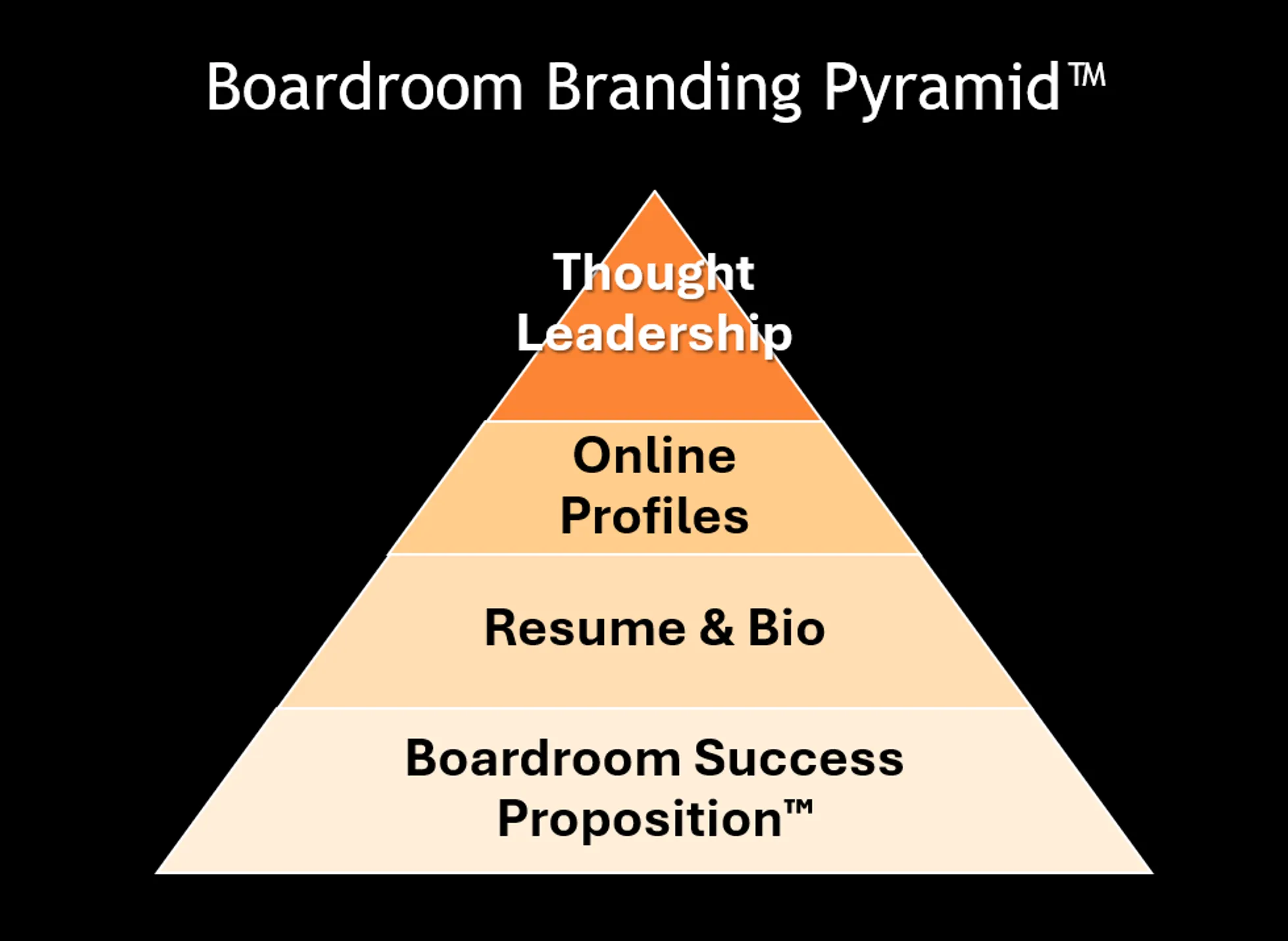
The Boardroom Branding Pyramid fixes that. It's a four-level framework that sequences your brand-building work in the order that compounds. Start at the bottom, build up, and each layer makes the next one easier.
Why a pyramid
Pyramids are stable because the base is wider than the top. Brands work the same way. When the foundation is solid, everything above it can lean on it without cracking. When the foundation is shaky, no amount of polish on the upper layers will hold.
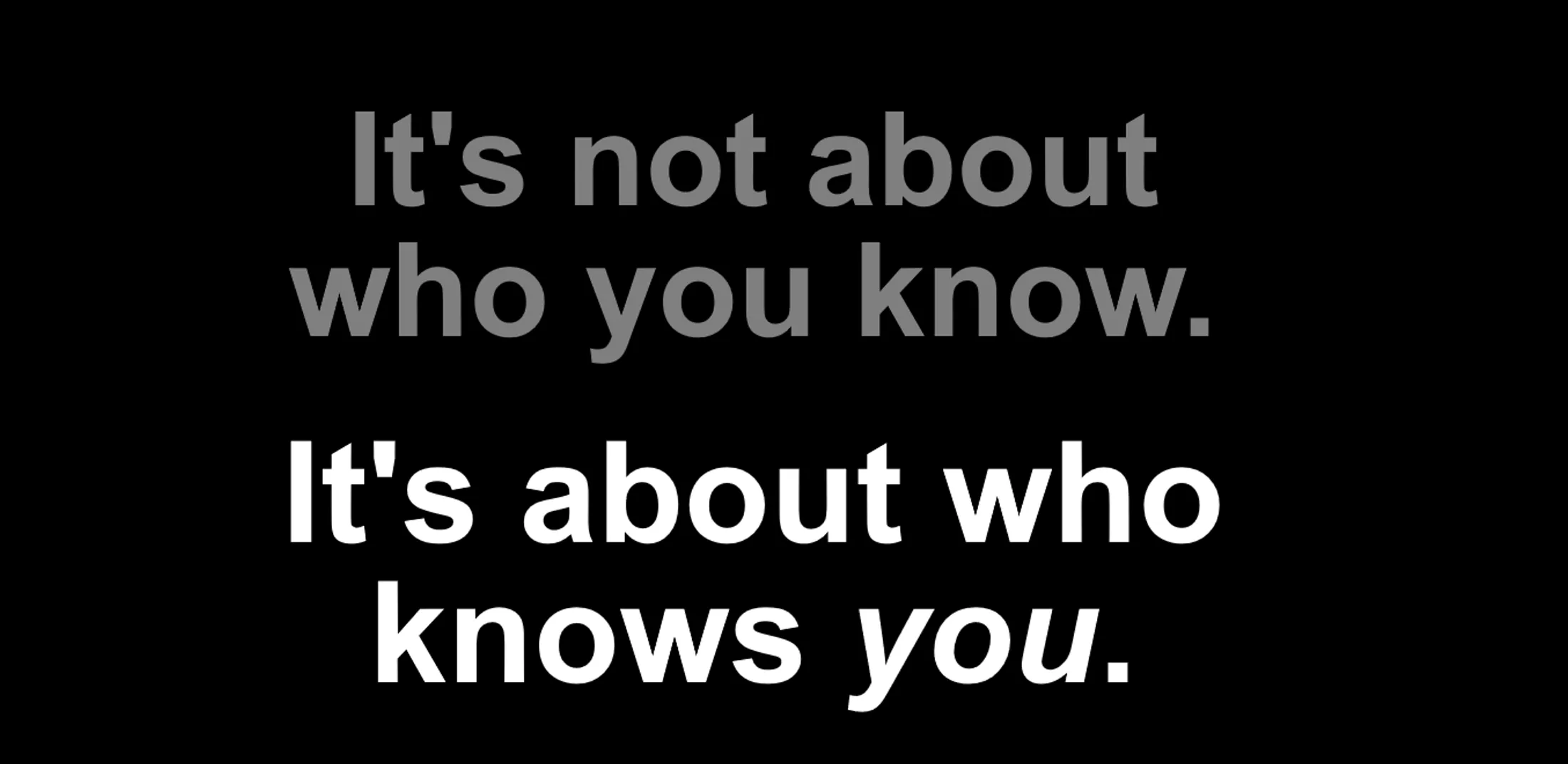
It's worth saying plainly what this whole effort is for. It's not all about who you know. It's about who knows you.
That distinction is what separates the candidates whose deal flow has dried up from the ones who keep getting invited into conversations they didn't even know were happening. The pyramid is how you become known, on purpose, for the right things, to the right people.
Level one: Your Boardroom Success Proposition
The foundation is a single, tight statement that answers three questions: Who are you? What value do you bring? What are you looking for?
Here's an example. I'm a West Coast based CTO with deep experience scaling enterprise SaaS platforms. I bring cybersecurity oversight, AI and machine learning acumen, and a practical lens on innovation. I'm looking to add value to the board of a privately held SaaS company.
Read that and notice what it does. It tells you who the person is, what they bring, and where they're aiming. There's no meandering five-minute career narration. There's no Jack-of-all-trades positioning that leaves a recruiter wondering when they'd ever lean into this person.
This is also the place where most candidates resist the most. The instinct is to cast a wide net so as not to miss opportunities. The reality runs the other direction. A wide net guarantees you'll be forgettable. Non-gov committees and board recruiters are filling specific talent gaps in their skill matrix. Regulated market experience. AI fluency. Audit committee readiness. If your positioning hedges, you don't show up as the answer to any of them.
Finding the right success proposition means finding your Zero Competition Target, the overlap of your industry expertise, your functional expertise, the problems you're genuinely passionate about solving, and where there's real market demand. That center is where the competition thins out and your value becomes obvious.
This statement is easy to read once it's refined. It's not easy to write. Spend the time. Everything above it depends on getting this right.
Level two: Your board resume and board bio
With the proposition locked, the board resume and bio become straightforward, because you already know what story you're telling.
The board resume is not your corporate resume with a new headline. A corporate resume is achievement-based and execution-focused. A board resume is strategic and governance-focused. It emphasizes oversight, influence, and the perspective you bring into the boardroom, not the work you rolled up your sleeves to deliver.
The structure that works for most candidates is contact information at the top, an executive summary that echoes your proposition, your board activity next because you're an active director, then your executive experience in summarized form, and education and certifications at the bottom. Two pages. Clients arrive with five- and ten-page CVs and walk out with tight, two-page documents that read better and get further.
The board bio is shorter, often three-quarters of a page to a single page, written in third person, and built to be dropped into a board package or a speaker introduction without further editing. Contact information, an introduction grounded in your proposition, board and advisory activity, career and education, and a touch of community involvement to add dimension.
A few design notes. Skip the clip art. The globe that's supposed to signal international experience just signals that you found clip art. Skip the call-outs, charts, and graphs. Your LinkedIn profile is where visual depth lives. Put your email, phone, and LinkedIn URL on the resume. Leave your home address off. Let the success proposition do the work.
Level three: Your online profiles
This is where the question shifts from how you describe yourself to how findable and how credible you are to people who haven't met you yet.
LinkedIn is where most of this happens. Board recruiters click through after you view their profile, since they're all on Premium and they see who's looking. Non-gov committees check you out before they reach out. The question they're answering is whether what they see online matches the relevance, credibility, and visibility they need.
A few things actually move the needle. A complete profile. A headline that reflects your proposition, not your last corporate title. A summary that gets the value across above the fold, before anyone has to click "see more." A professional photo. A built-out experience section that emphasizes governance and strategic contribution where it applies. Recommendations from people who've worked with you, because third-party social proof carries weight your own words can't.
It's worth saying that the number of followers is not the metric. Plenty of board candidates worry that they don't have 20,000 followers and assume they need them. They don't. What matters is whether the people who do see your profile recognize you as an authority in your area. Ten thousand random connections is worth less than two hundred people who would pick up the phone.
Beyond LinkedIn, a personal website is worth considering, especially if someone else shares your name and shows up in unflattering search results. A simple, professional site puts you in control of the first page when someone Googles you. It demonstrates seriousness. And it gives you a place to host your bio, recent articles, and a contact path that doesn't depend on LinkedIn's algorithm.
Level four: Thought leadership
At the top of the pyramid is the work most candidates skip, even though it's the layer that compounds the fastest.
Thought leadership means sharing original, valuable ideas that move your industry forward. It means having a position on the questions your industry's CEOs are actually wrestling with. Not generic advice. Not reposts of someone else's article with a thumbs up. Your perspective, framed clearly, published consistently, and supported by the experience that earned you the right to have it.
The reason this layer compounds is that authority is not random. Authority shows up when you have a clear problem you're known for solving, a clear framework for solving it, and a clear point of view that's willing to challenge a long-held industry assumption. When you put those three things in front of the right audience, repeatedly, you stop being one of many qualified candidates and start being the candidate people remember by name.
A signature framework is one of the most useful assets here. Something memorable, simple enough to sketch on a napkin, that captures your perspective on a meaningful industry problem. Clients we work with build frameworks like the IP3 talent model for HR leadership, the Ground Truth model for hospitality property investing, or the Fiduciary Resilience model for boardroom oversight of technology risk. Each one anchors a body of content, gives the candidate something to be known for, and shows up in the AI search results when someone asks about that topic.
The publishing side is more manageable than most people expect. You don't need to post every day. The LinkedIn algorithm has moved toward relevance over recency, which favors substantive content with a longer shelf life. One thoughtful post a week, built around your framework, supporting a cornerstone article that lays out your full perspective, is enough to start building real visibility within ninety days.
Build in order
The temptation is always to skip ahead. The bio feels easier than the proposition. The LinkedIn refresh feels more productive than rewriting the resume. Posting something feels more visible than thinking through a framework.
Each shortcut costs you on the back end. A bio written before the proposition is locked will read like a generic career summary. A LinkedIn profile updated before the resume is settled will pull the eye in three directions. Thought leadership without a foundation underneath it will sound like everyone else's thought leadership, and there's a great deal of that already.
Build in order. Get the proposition right. Let it shape the resume and bio. Let those shape your online presence. Then start publishing into a foundation that can hold the weight.
Your next board seat is unlikely to come from someone you already know well. It's far more likely to come from someone two or three connections away who heard your name, looked you up, and found a brand that told them exactly who you are, what you bring, and what kind of board would benefit from having you in the room.
That's what the pyramid is for.
About the author

David Kochanek
Founder
I help executives and companies build authority, visibility, and trust with thought leadership marketing and executive branding.